Overview
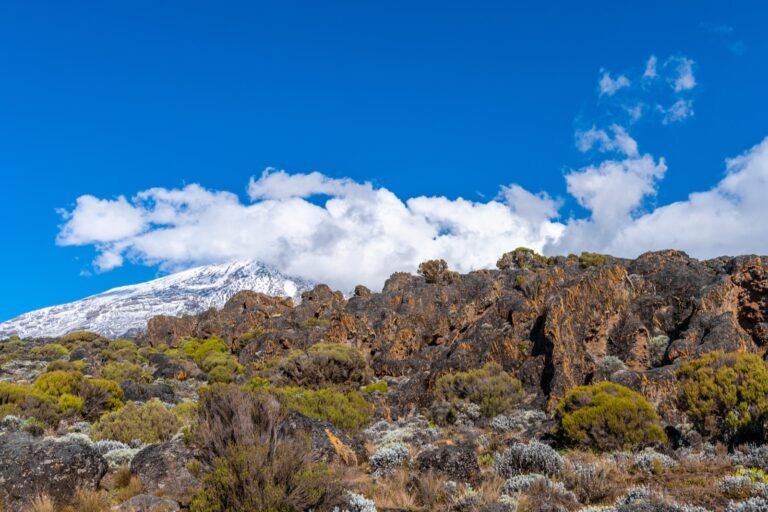
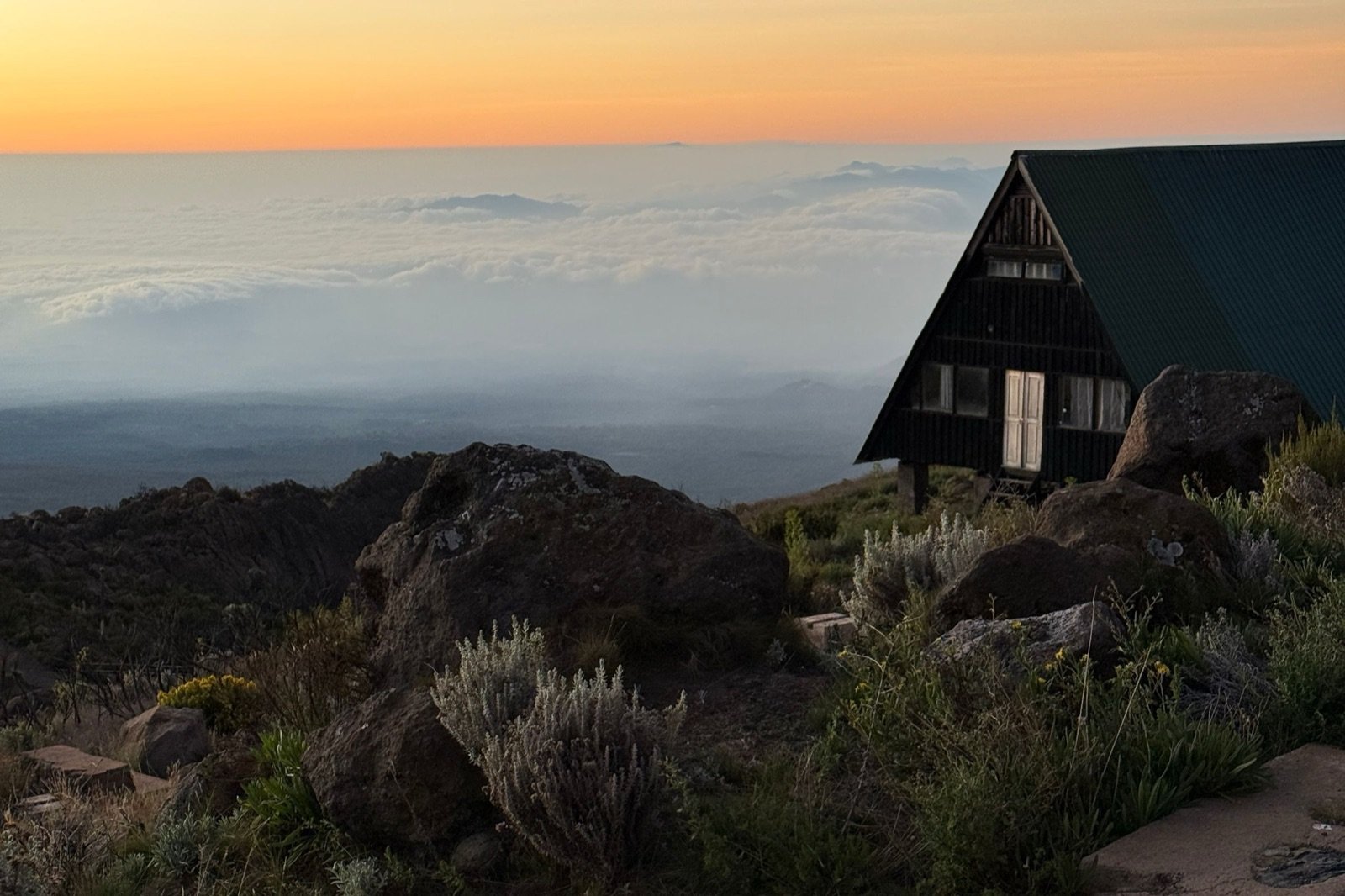
Marangu climbs the south-east side on a gradual trail, and you sleep in shared mountain huts instead of tents. The same path is used up and down, and the shorter itinerary means less time to acclimatise, so its summit rate is lower.
Who it suits
Marangu Route is best for
- Climbers who prefer huts to tents
- Travellers who want a simpler, more direct trail
- Rainy-season climbs
Altitude profile
How the climb builds, day by day
- Stage
- Marangu Gate to Mandara Hut
- Camp
- Mandara Hut
- Sleeping altitude
- 2,700 m
- Highest point
- 2,700 m
- Walking
- 4–5 hours
Altitudes are indicative and confirmed per route by your guide.
Itinerary
Day-by-day plan
Day 1Marangu Gate to Mandara Hut
- Sleep 2,700 m
- High point 2,700 m
- 4–5 hours
- 8 km
Rainforest walk to the first huts.
Day 2Mandara to Horombo Hut
- Sleep 3,720 m
- High point 3,720 m
- 5–6 hours
- 12 km
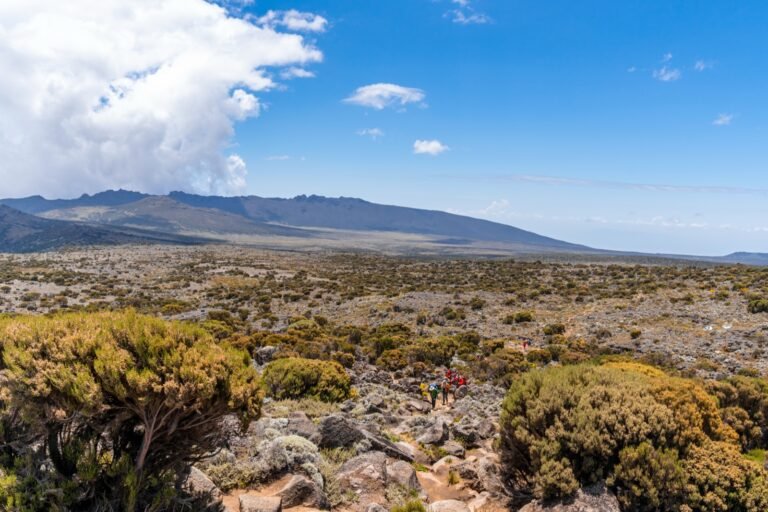
Moorland with views of Mawenzi.
Day 3Acclimatisation day
- Sleep 3,720 m
- High point 4,020 m
- 3–4 hours
- 6 km
Hike to Zebra Rocks and back to sleep at Horombo.
Day 4Horombo to Kibo Hut
- Sleep 4,700 m
- High point 4,700 m
- 6–7 hours
- 10 km
Cross the alpine desert of the saddle.
Day 5Summit day
- Sleep 3,720 m
- High point 5,895 m
- 12–15 hours
- 22 km
Night ascent via Gillman's Point to Uhuru Peak, descend to Horombo.
Day 6Marangu Gate
- Sleep 1,860 m
- High point 3,720 m
- 5–6 hours
- 20 km
Long final descent.
Group departures
Join a group on this route
Marangu · 6 days
$2,090
Reserve · $200 deposit for Marangu · 6 daysThe price
What's included
Included
- Park, camping and rescue fees
- Licensed lead guide, assistant guides, cook and porters
- All meals on the mountain and filtered drinking water
- Four-season tents, sleeping mats and a mess tent
- Oxygen, pulse oximeter checks twice a day and first-aid kit
- Two nights at a hotel in Moshi or Arusha
- Airport transfers on arrival and departure
Not included
- International flights and Tanzania visa
- Travel insurance with high-altitude cover
- Tips for the mountain crew (guideline provided)
- Personal gear and sleeping bag (rental available)
- Drinks and meals in town not listed
Questions
Frequently asked
How hard is the Marangu Route?
No technical climbing is needed. You walk 4–7 hours most days; summit night is the hardest at 12–16 hours. A steady pace and good acclimatisation matter more than raw fitness.
Is 6 days enough to acclimatise?
Longer itineraries give your body more time to adjust and have clearly higher summit rates. Your advisor can add an extra acclimatisation day if you want more margin.
What happens if someone feels unwell?
Guides check oxygen saturation and pulse twice a day. Every group carries bottled oxygen and a stretcher, and anyone showing serious altitude symptoms descends with a guide straight away.
Add a safari
Climb + safari packages on this route
Compare